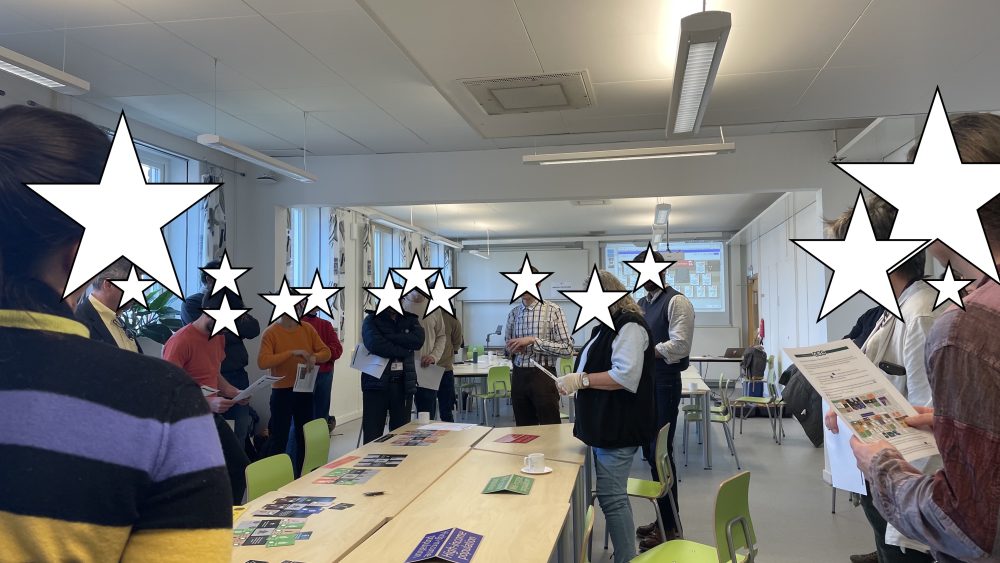
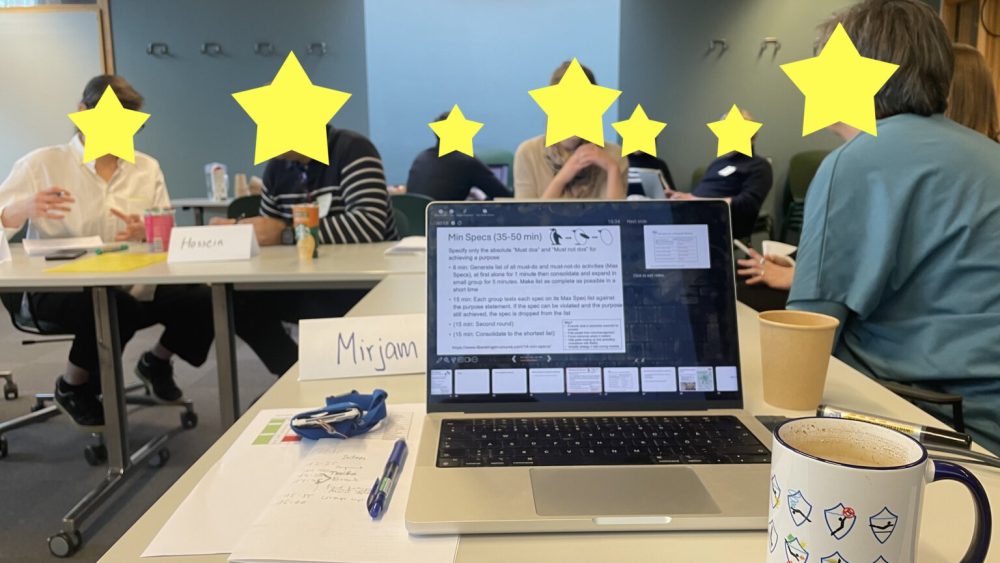
27 curious teachers joined Ola Leifler's demonstration of large-scale social simulations ("Megagames") yesterday. Can you imagine playing a game with 180 people in individual …
We are excited to invite you to the final presentations of projects in the Collegial project course "Teaching Sustainability for a Circular Built Environment"! …
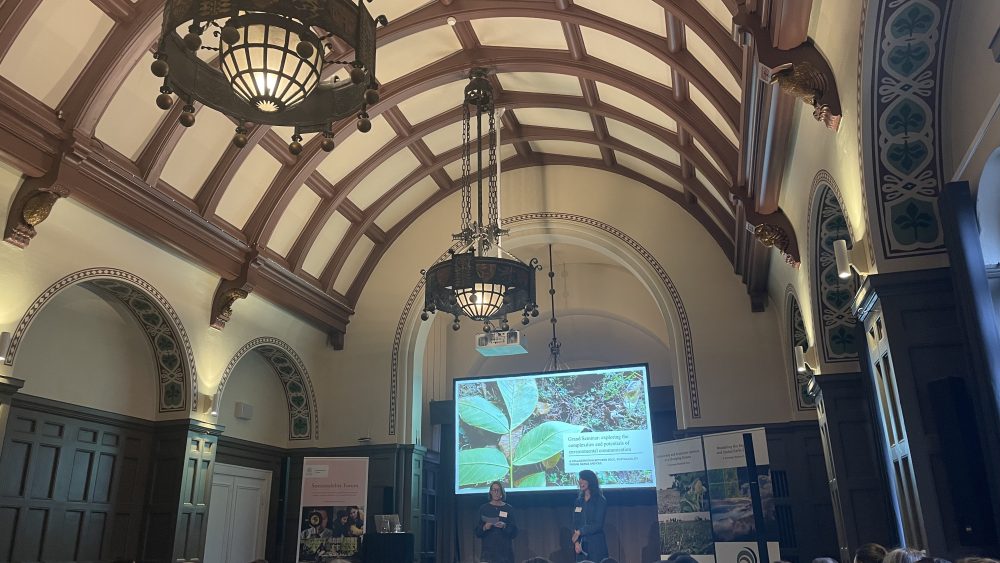
Did you attend the Grand Seminar on "Exploring the complexities and potentials of environmental communication", organised by LU Sustainability Forum, BECC and MERGE? If …
We invite you to join the (bring-your-own) lunch seminar on the topic, and/or to read this blog post to work through the reflection prompts and examples yourself.
The final meeting of the course "Teaching for Sustainability" at LTH tried out a new format: We invited critical friends from across LU to join us as critical friends for presentations and discussions, and it was an inspiring afternoon!
The structures we use for discussions have an influence both who speaks and who gets heard. Using structures where everybody is included and where ideas can be evaluated independently of who had them contributes to a more inclusive environment in which a wider range of perspectives is considered and solutions are improved. Here are two examples of such "Liberating Structures"
There are many factors that make it difficult to have conversations about sustainability. In this blogpost, I present the "Spiral of Silence" model, based on work by Crease & Singhasaneh (2023), that shows many of those factors