Grid View

“Using Wicked Problems when Teaching for Sustainability in Air Pollution Courses – Design of Examples and Problem Descriptions” by Johan Friberg, Joakim Pagels, Jenny Rissler, and Aneta Wierzbicka

Figure 1. Aerosol related courses taught at the Departments of Physics, and Aerosol and Ergonomics for each study period (”läsperiod”, LP). Environmental Monitoring (FKFN35), Aerosol Technology (MAMF55), Aerosol Technology Project (MAMN20), Air, Particles and Health (MAMN75), Atmospheric Physics and Chemistry (FKFN45).

Air pollution in the form of aerosol particles has a controlling effect on several of our major societal and environmental challenges. Exposure to air pollution is the largest environmental health risk factor in Europe, including ambient, indoor and workplace exposure. Aerosol particles in the atmosphere are furthermore one of the major uncertainties when predicting future climate scenarios. Aerosols are also important as they have a controlling impact on disease transmission as demonstrated by the recent pandemic.

The engineers educated at LTH will develop the green technologies of the future (for example within transport and energy, circular materials and the built environment) and need to understand the overall sustainability aspects of the new technologies they develop. They also need to understand different viewpoints, interests, and consequences of the technologies. Theories and tasks on basic physics, chemistry and measurement of aerosols can be classified as “tame” problems using the terminology introduced by Rittel and Webber (1973). Tame problems can be taught with traditional methods used in natural science and engineering. However, societal challenges and problems differ substantially, and the solutions are often not “right or wrong” but “better or worse”, making traditional educational approaches less effective. These types of problems can be considered “wicked” problems (Rittel and Webber, 1973).

Using wicked problems in teaching and learning presents challenges due to their complex, interconnected nature and lack of clear-cut solutions and interconnection with other problems/issues (Lönngren, 2021). According to Conklin (2006), wicked problems are inherently different from ordinary problems because they have no definitive formulation and no true stopping rule. Therefore, in our opinion, using wicked problems in teaching as a basis for discussions presents an interesting tool to emphasize the complexity of real-world sustainability challenges. To cite Laurence J. Peter “Some problems are so complex that you have to be highly intelligent and well informed just to be undecided about them.” However, criticism has arisen regarding the treatment of complex problems as ‘wicked,’ as it can lead to the notion that ‘all is relative,’ resulting in indecision. This, in turn, often neglects the practical aspects for those who need to address and act on these complex issues (Noordegraaf et al., 2019). The use of the term “wicked problems” in sustainability literature was recently reviewed (Lönngren and van Poeck, 2021). It was found that the concept is not always consistently applied and authors in the literature ascribe many different meanings to the concept.

Wicked problems are typically addressed by different interest groups (stakeholders) with different, often conflicting, viewpoints. Hence, possible solutions require compromises and trade-offs. To address these issues already in the education of the next generation of engineers, Savin-Baden (2000) suggests embedding problem-based learning (PBL) in curricula, which encourages students to engage with real-world problems through critical thinking and collaborative learning. PBL has been shown to promote deeper understanding, increase student motivation and engagement and promote teamwork and collaboration. However, the problem formulations are often quite open, where students set up their own learning goals and it often lack the element of different conflicting viewpoints that may be needed to contribute to solve our major complex societal challenges.

The “wicked problem” approach has been used in teaching for some time. Positive aspects of such approach include active student participation, development of critical thinking, transdisciplinary learning, student-centered learning (through discussions, shaping the learning process, co-creation), situated learning (real-world context). Some challenges with using wicked problems in teaching have also been described for example frustration and stress from students who expect to be given a straightforward answer or solution to a problem. Such stress is not productive for the learing process (Cilliers et al. 2010) and may lead to students not daring to engage in discussions, not knowing how to approach the problem and not knowing what is expected from them. It is therefore important to help the students to reduce their stress and explain to them how they should approach the problem, without loosing the complexity in the problem itself (Lönngren 2021). It has been suggested to use a hopeful way to teach and learn about unwieldy and overwhelming issues that many of today’s undergraduates will inevitably be expected to confront in the future (Sharp et al. 2021).

The course “Sustainable development in Nano-Perspectives” at the engineering nanoscience program at LTH in Lund was initiated with a large degree of student involvement (Lönngren et al. 2010). The course includes a “matrix” approach with stakeholder groups and interdisciplinary groups. More recently, Lönngren (2021) describes design principles to formulate wicked problems for engineering and natural science education. Her recommendation is to start with a problem that engages the students and choose interest groups and stakeholders that make it possible to discuss the problem from different perspectives. Conflicts of interest between the groups are clearly marked in the problem formulations. At least one perspective and argument is included for each interest group. Most importantly, it is stressed to formulate a concrete context, a clear goal and a receiver for the task to reduce student’s stress and to get them to focus on the problem. It is further recommended not to formulate the right answer as yes or no and not recommended to give the students a set of solutions to choose from, as there is a risk that the students relatively fast decide for one solution and that there is nothing more to discuss (Dobson & Tomkinson, 2012). It is better to keep the potential solutions open so that the students get the chance to discuss the problem without preconceived notions and to come up with their own “solutions”.

There is a series of courses in aerosol science that we teach (Figure 1). The courses provide students the opportunity to gain extensive expertise in the field and to connect air pollution problems to their expertise at different engineering programs at LTH. Aerosol sciences are relevant for several of the SDGs as further elaborated in section 4 in this report. We as teachers always touch upon sustainability issues throughout these courses, even though sustainability itself is seldom the main character in our teaching activities/sessions.

Figure 1. Aerosol related courses taught at the Departments of Physics, and Aerosol and Ergonomics for each study period (”läsperiod”, LP). Environmental Monitoring (FKFN35), Aerosol Technology (MAMF55), Aerosol Technology Project (MAMN20), Air, Particles and Health (MAMN75), Atmospheric Physics and Chemistry (FKFN45).

In this work we explore if and how we can use “wicked problems” in teaching for sustainability in Aerosol education at LTH. Within this overarching goal we plan specifically to a) explore different approaches to introduce wicked problems in our courses and b) create portfolio of wicked problems in four different aerosol related areas put in a larger sustainability perspective.

We plan to introduce wicked problems in different courses taught by us as a means of fostering discussions among the students, helping them to engage and leading to active participation. This will in turn also help students to develop the skills needed to meet real-life challenges related to sustainable development and to contribute to solve complex problems such as air pollution, climate, spread of infectious deceases, and circular economy.

Introducing sustainability considerations throughout the course(s)

We aim to include the sustainability aspects and the concept of using wicked problems in the course syllabus and considered when aligning learning outcomes, teaching and learning activities and assessment/examination through constructive alignment (Biggs,1996). The students will be introduced to the wicked problem methodology already at the intro-meeting of the course, provided with experience from teachers and researchers who work with sustainability, along with examples on how the wicked problem approach can be applied to non-tame problems in the air pollution field. Also, the involved teachers shall be introduced to the concepts at an early stage – preferably during the planning of the course.

The following are examples to introduce sustainability throughout the course.

  • Discussions, of a topic and wicked problem defined by the teacher, during an ordinary lecture (for example 15-20 min group discussions or dedicated discussion sessions (seminars) lasting 1-2h). This is further elaborated in section 3 below.
  • Require that the students integrate sustainability considerations in the course project work, which will form part of the grade from the project. The projects are preferably based on wicked problems, enabling in-depth sustainability-oriented discussions in project reports and oral presentations.
  • Assessment of sustainability considerations at written and oral exams (learning outcome), where questions are designed to focus on sustainability issues in addition to topic specific (mono-disciplinary) knowledge and methods.

Since many of the aerosol courses involve several lecturers with different expertice, the course coordinators must ensure that all teachers in given courses are aware of the plans and link/emphasize sustainability issues in their lectures using the “wicked problem approach”. The students are expected to take leading roles in the teaching practice, but teachers must overview the discussions to ensure that the discussions are on-topic and to help students to advance if they are stuck to avoid the frustration that may arise if not.

How to conduct the discussions – practical approach

Wicked problems typically lack clear-cut solutions and involve multiple stakeholders with various interests and viewpoints. Our idea is to utilize this complexity to facilitate sustainability consideration discussions where students analyze information, consider diverse viewpoints, think critically, gain a holistic approach, and also train in negotiations, finding common grounds, reaching compromises, and agreeing on solutions with the least negative consequences (they can foresee). We see that this would suit teaching aerosol science in a very good way and widen the scope of education when creating discussion activities that allow students to reflect on their new gained knowledge.

Below we list four examples of wicked problems (portfolio of cases), within each author’s expertise, that can be used as basis for discussions. Depending on the subject, students’ knowledge of the subjects and their skills in team discussions, these can be introduced gradually – also depending on the number of lectures allocated to the specific topic (which varies between courses and topics):

  1. Short discussions focused on finding arguments for pre-defined stakeholder representatives. A thorough background info to be given by the teacher followed by splitting the students into smaller groups of mixed pre-defined and assigned stakeholder representatives. After 10-15 min discussions in smaller groups – each group presents their discussions/agreements, and the teacher(s) summarizes the arguments for all course participants.
  2. Longer discussions (30-45 min), where after introduction of the problem, students are asked to define stakeholder groups themselves and put forward the arguments/different viewpoints, session ends with summary for all course participants.
  3. Matrix group discussions with stakeholder groups and interdisciplinary groups in 2 h sessions where students first define stakeholder perspectives, then are divided into stakeholder groups to prepare themselves. This is followed by interdisciplinary mixed groups with one representative from each stakeholder in each group, representing the viewpoints. Here students are asked to put forward the best possible solutions and describe the trade-offs. Session finishes with presentations from the mixed groups to all course participants in a session lead by the teacher(s) followed by the teacher(s) summary.

Aerosols and Sustainability

Aerosol science has a clear and direct impact on several of the Sustainable Development Goals (SDGs). As air pollution poses a risk to human health globally and influences the climate, and thus, the link between air pollution and the SDGs is encapsulated particularly in SDG 3, which focuses on good health and well-being, in SDG 13, climate action, and in SDG 11, which emphasizes sustainable cities and communities. Reducing air pollution can improve public health by decreasing diseases, enhancing the quality of life, and increasing productivity. Furthermore, by specifically addressing air pollution, cities can become more sustainable, for example by offering more efficient public transport and reducing greenhouse gas emissions. This not only improves the health of urban populations but also contributes to the mitigation of climate change under SDG 13 by reducing greenhouse gas emissions. Aerosol particles and aerosol-cloud influence on the Earth’s radiation balance hold the largest uncertainties in the current climate projections. The uncertainties in future precipitation patterns are far larger than in the temperature. Decreased precipitation in dry regions will pose more stress on societies in the coming decades (SDG 6, clean water and sanitation). Our inability to predict future warming and precipitation accurately limits our ability to design effective mitigation strategies and to adapt to the changing climate (SDG 13), which indirectly influences several of the SDGs. Effective management of air quality therefore intersects with multiple sustainability objectives, from health to sustainable urban planning and climate action, highlighting the necessity of integrated approaches to pollution control and urban development. We aim to use hopefulness (Sharp et al. 2021) when teaching air pollution for sustainability using successful examples of how wicked air pollution problems from the past were solved e.g. acidification, ozone hole or tobacco smoking.

Portfolio of cases: Wicked problems for Air Pollution Courses

The authors of this work have expertise in different societal sectors and regularly interact with stakeholders in these sectors. We have designed four different cases formulated as wicked problems within aerosol science capturing sustainability aspects discussions. All these problems deal with aerosols and air pollution to different degrees and also address the larger sustainability contexts and the transition to new “green” technologies and that are central at different LTH programs (Examples below):

1. Indoor Air Quality and Energy Efficiency (V program),

2. Electrification of Road Traffic (M, W

programs),

3. Circular Economy and Secondary Use of Materials (N, V Programs),

4. Trade-offs between Climate and Health Impacts of Aerosols (W Program).

Wicked problem related to indoor air quality

Is use of portable air cleaners justified in Sweden?

Background info: Air cleaners based on mechanical filtration can effectively remove airborne particles (linked to respiratory and cardiovascular diseases) hence improving indoor air quality where we spend 90% of the time. There are various manufacturers of air cleaners, and some of heavily promoted solutions (e.g. ozone generators) lack scientific basis to prove positive effects on air quality and in the worst-case scenario can lead to formation of air pollutants (by-products) that can have negative health effects and cause airways and eyes irritation. In many parts of the world where outdoor air quality is very poor (high concentration of air pollutants) it might be that to maintain acceptable air quality indoors air cleaners are needed. Especially in the case of homes where sensitive subgroups of the populations reside (e.g. children, elderly, and individuals with existing respiratory and cardiovascular diseases). On the other hand, outdoor air quality in Sweden seldom exceeds EU ambient air quality limits. Considering climate change we all strive for energy use optimization, whereas use of portable air cleaners means increase in energy use. (Additional level of complexity depending on students’ skills: WHO air quality guidelines vs EU air quality limits, aspects of ventilation in buildings and filtration of supplied air in buildings (where such option is possible), different types of ventilation different possibilities, costs associated with it)).

Possible stakeholder groups: energy agency, company manufacturing ozone generators, company manufacturing portable air cleaners based on mechanical filtration, property owners, housing associations, parents of children with respiratory diseases, asthma and allergy association. (Additional: ventilation company, municipal environmental protection department))

Course where the problem may be implemented: TFRC06/MAMF55

Wicked Problem on Transport Emissions and Health – Clean Air Zones

Sweden is considering to introduce clean air zones in the central parts of it´s major cities. The aim is to reduce the population exposure to health relevant air pollutants and noise.

Combustion Vehicles using Gasoline and Diesel give rise to tailpipe emissions containing ultrafine particles, Black Carbon and Nitrogen Oxides with documented adverse health impacts (lung disease, cardiovascular disease etc). However, the latest vehicles following the Euro 6 emission legislation are equipped with advanced after treatment systems that have strongly reduced emission levels. Low carbon fuels such as Biodiesel, alcohols and biogas have lower emission levels compared to the fossil fuels, but exhaust emissions remain.

To reduce the climate footprint the vehicle fleet is now becoming increasingly electrified. Electrical vehicles eliminate tail-pipe emissions but non-exhaust particle emissions from brakes, tyres and road dust remain. Non-exhaust emissions already today dominate the transport particle emissions by mass (PM2.5 and PM10) and contain toxic substances such as metal oxides, microplastics and quartz. However, the health impacts of non-exhaust emissions remain poorly understood. EU has agreed on the world´s first emission standard for brake PM emissions and tyre wear as part of EURO7. However, the recently sharpened EU Air quality directive that each city need to fulfil does not include indicators/pollutants specific for non-exhaust emissions.

A suggestion has been put that in the clean air zone, all diesel and gasoline vehicles would be banned, only electric vehicles and combustion vehicles that use biogas would be allowed. Experts and stakeholders are invited to a meeting where the suggestion should be revised to a final agreement to be put for the politicians.

Stakeholder Groups: Environmental departments of our largest municipalities/cities, Swedish EPA, Astma & Allergiförbundet, NGO AirClim, Auto Manufacturers Association, Associations of Manufacturers of Brakes and Tyres (FKG).

Course where the problem may be implemented: FKFN35/MAMF55

Wicked problem on circular materials

There is a strive and need to go from a linear material system to circular materials streams. This will save the environment by reducing the environmental footprint of humanity – by reducing the need of primary materials and lowering the carbon footprint. On the other hand, the utilization of waste will introduce new environmental and human risks since these residual streams are not as “clean” and “well defined” as primary materials.

Today the regulations are not optimized for secondary use of materials. As an example, as soon as a product is classified as waste it falls under specific waste legislation which is typically much stricter than the legislation for and regulation of primary materials when it comes to content of potentially toxic elements. A key question is if the current legislation related to waste management and secondary use of waste streams is adopted to the new circular economy, and how it should help saving the environment from the new threats, without stopping the transition into a circular economy?

One example of a waste material that can be utilized is ash from waste incineration. The fraction of waste that cannot be recycled in any other way will, also in the future, be incinerated recovering the inherent energy. A residue from the incineration is ash, classified as hazardous waste due to the high content of metals that needs to be utilized, if not as today putting it to landfills. However, even though the levels of potentially toxic elements in the ash are above the limit values for the waste to be used for secondary purposes, the levels are below those valid for primary materials, and tests show that these are not leaching/bioavailable.

Example of stake holder/interest groups:

  • Regulators of materials, circularity, climate
    • Municipalities, Governmental agencies, EU organs
  • Regulators on environmental protection
    • Governmental agencies, EU organs
  • Activists that
    • Primarily sees the risks with utilizing materials without being 100 % sure they are safe from the perspective of human and environmental exposure to PTEs
    • Want to save natural resources and reduce CO2 emissions (somewhat contrary to the above “activist type”)
  • Citizens

Course where the problem may be implemented: MAMN75

Wicked problem on air quality and climate

Is our strive for improved air-quality in conflict with climate mitigation?

Air pollution leads to ~6-9 million deaths globally. Most of these are due to inhalation of airborne particles, so-called aerosols. Cutting the emissions of aerosols (and aerosol forming species) would result in improvement of the air quality, leading to saved lives (and explicitly target SDG 3). However, aerosols cool the climate, and reducing the aerosol concentrations will therefore result in climate warming, further adding to human caused climate change (SDG 13).

Targeting aerosol emissions is not an easy task. Most human activities cause increased aerosol load (adding to the complexity of solving AQ issues). Some examples of these are combustion, agriculture, forest management, mechanical ware of cars’ breaks and tires. All of these impacts both the AQ and climate.

Further consideration: Aerosols have short lifetimes compared with typical transport times in the atmosphere. Hence, they become local and regional AQ problems rather than global ones. Should only regional stakeholders and interest groups sit at the table when discussing the AQ-CC nexus?

Suggestion of stakeholders and interest groups:

  • Regulators on climate mitigation
    • Municipalities, Governmental agencies, EU organs
  • Regulators on air quality
    • Municipalities, Governmental agencies, EU organs
  • Activists (mostly climate oriented in Europe, could be more air-quality oriented in some more polluted regions).
  • UN organs (WMO, WHO, IPCC, etc.)
  • Actors impacting the aerosol load, for example:
    • Industry, Agricultural sectors, Forest owners and forest management companies

Courses where this problem may be implemented: FKFN45

References:

Biggs, J. (1996). Enhancing teaching through constructive alignment. Higher education, 32(3), 347-364.

Cilliers, F. J., Schuwirth, L. W., Adendorff, H. J., Herman, N., & Van der Vleuten, C. P. (2010). The mechanism of impact of summative assessment on medical students’ learning. Advances in health sciences education, 15, 695-715.

Conklin, J. (2006). Wicked Problems and Social Complexity, Chapter 1 in “Dialogue Mapping: Building Shared Understanding of Wicked Problems” Wiley, ISBN: 978-0-470-01768-5.

Dobson, H. E., & Bland Tomkinson, C. (2012). Creating sustainable development change agents through problem‐based learning: Designing appropriate student PBL projects. International Journal of Sustainability in Higher Education, 13(3), 263-278.

Lönngren, J., Ahrens, A., Deppert, K., Hammarin, G., & Nilsson, E. (2010). Sustainable Development in Nano-Perspectives: An Innovative Student Initiative. In Engineering Education in Sustainable Development, Gothenburg, Sweden, September 19-22, 2010.

Lönngren, J. (2021). Wicked problems i lärande för hållbar utveckling–Vägledning för att ta fram exempel och problembeskrivningar. Högre utbildning, 11(3). In Swedish.

Lönngren, J., & van Poeck, K. (2021). Wicked problems: a mapping review of the literature. International Journal of Sustainable Development & World Ecology, 28(6), 481–502. https://doi.org/10.1080/13504509.2020.1859415

Noordegraaf, M., Douglas, S., Geuijen, K., & Van Der Steen, M. (2019). Weaknesses of wickedness: A critical perspective on wickedness theory. Policy and Society, 38(2), 278-297.

Rittel, H. W., & Webber, M. M. (1973). Dilemmas in a general theory of planning. Policy sciences, 4(2), 155-169.

Savin-Baden, M. (2000). Problem-Based Learning in Higher Education: Untold Stories, Buckingham: The Society for Research into Higher Education and Open University Press.

Sharp, E. L., Fagan, J., Kah, M., McEntee, M., & Salmond, J. (2021). Hopeful approaches to teaching and learning environmental “wicked problems”. Journal of Geography in Higher Education, 45(4), 621-639.

This entry was posted in

Experiences from the field

Comments

0 Comments Leave a comment

Contributing to Our Community: How You Can Support “Teaching for Sustainability”

Two people standing on the pavement, before text that says "Art of Change".
Photo by Steven Curtis. Art of Change. (2014)

The initiative Teaching for Sustainability is intended to serve as a hub for educators at Lund University, offering a platform for training, resources, and community building. In growing our work and network, we continue to think about what our community needs. In the face of our environmental and societal challenges, I have been thinking more about what it means to belong to a community, to cultivate a community, and to contribute to a community.

Community can be defined as a social group with a shared sense of identity, values, and norms, where members are interconnected and interdependent, with an implicit desire to contribute and participate in the collective maintenance and development of the group [1]. Though, a functioning community is not free; it requires effort, legitimacy, and resources. Members shall feel a sense of belonging, trust, and shared purpose as well as receive benefits that serve their individual and collective needs.

Following the model proposed by University of Tasmania in Australia [2], we established a core group, an inner circle, and an outer circle.

  • Working Group: Engages in operational planning and implementation of activities and resources.
  • Task Force: Receives information and provides input that guides the work of the working group
  • Community of Practice: Our community engages and empowers members to explore real approaches to integrate sustainability into their teaching practice.

[Edit 21.8.2025: Please note that we have renamed the “Task Force” to “Roundtable”, and the “Working Group” to “Coordination Team”]

Members have the opportunity to engage with the community as much or as little as they like, based on their needs and capacity.

A Call to Action

As the initiative continues to grow, we invite members of our community to contribute their time, effort, skills, and passions to the operationalisation and implementation of our work. Currently, we are seeking additional members to join the Working Group or Task Force.

For those wishing to join the Task Force, we ask that you commit to the following:

  • Attend at least two meetings per semester.
  • Receive updates about content, events, and opportunities.
  • Share information with your respective stakeholders.
  • Provide strategic input and suggestions to steer our work.

For those wishing to join the Working Group, we ask that you commit to the following:

  • Attend at least one meeting per month.
  • Host one event (e.g. lecture, seminar, workshop, social event) per semester (with support from other members)
  • Actively contribute to the sharing of information in the Community of Practice.
  • Bring whatever ideas, skills, or passions to shape our work.

If interested, we welcome you to join any of our meetings to observe how we work. We’re quite easy – this is not a lifelong commitment, but an opportunity to contribute with whatever energy or capacity you have. Are you interested contributing in another way (e.g. dissemination, newsletter, photographer, graphic designer, etc.)? For more information, contact Terese Thoni (terese.thoni@cec.lu.se) – Education Coordination, LU Sustainability Forum.

As a member of the Working Group myself, I have found strength and inspiration working with my colleagues. Our work and their support has given me a sense of purpose, which has helped me find strength to continue working towards sustainability. I have planned events that speak to my interests; I have contributed my skills with web design and communication. I feel our efforts are appreciated by faculty and staff at the University. Ultimately, I’m proud of our work. My colleagues and I would love to work collaboratively and support you, too.

References

[1] Etzioni, A. (1994). Spirit of community. Simon and Schuster.

[2] Murray, S., & Salter, S. (2014). Communities of practice (CoP) as a model for integrating sustainability into higher education. In Handbook of research on pedagogical innovations for sustainable development (pp. 170-188). IGI Global. http://dx.doi.org/10.4018/978-1-4666-5856-1.ch009

14/08/2024

This entry was posted in

Task Force

Comments

0 Comments Leave a comment

Reflections on teaching for sustainability from Fredrik Strid’s exhibition “Making Nature”

[Featured image: Fredrik Strid, Alla fåglar i Sverige (detalj), 2018–2024. Foto: Emma Krantz/Skissernas Museum]

Having climbed the light and airy staircase to the second floor of Skissernas Museum, it takes a moment before I realise that the massive, black mass in front of me is not just a black wall, but a piece of art. It is called Eko (echo) and consists of lots of boxes on top of each other all painted black. But the containers are not secure it seems. From every crack and opening, what looks like thick, black paint or oil is dripping, forming puddles on the floor. A symbol of the echo of the, in part, dark past of museums, scientific collections, archives, and exhibitions. A reminder to students and staff of universities and research institutions that sometimes scientific achievements have been made thanks to what we would now consider unethical methods, and to take a moment to thank those who paid for it, perhaps?

Fredrik Strid, Eko (detalj, 2024. Foto: Emma Krantz/Skissernas Museum

The link to natural history collections gets clearer when entering the second room. The 257 birds – one for each species in Sweden – made from stearin make up an impressive yet fragile collection. Apart from the fact that they are not just models of birds but also candles that can burn down in a matter of hours, they are standing on simple shelves with thin wires that are attached only to the floor, looking like one wrong turn might cause them to collapse. And while the fact that the sculptures are the same size as real birds makes them come alive, their lack of colour makes me wonder which species are threatened to go extinct. Will they, too, represent echoes from the past?

Fredrik Strid, Alla fåglar i Sverige (detalj), 2018–2024. Foto: Emma Krantz/Skissernas Museum

Sculpturer Fredrik Strid’s exhibition “Making Nature” took six years to complete [1, 2]. It is a multifaceted collection that raises questions about, inter alia, how the way we portrait nature affects how we understand, care, and ultimately govern nature. It also opens for discussions about the role of science, museums, archives, and other institutions in society, about the history of environmental politics – while some bird species are threatened, some, like the sea eagle have become symbols for how dedicated species protection can curb the curve – and much more.

Exhibitions like this, and indeed art in general, can be used to strengthen teaching for sustainability in many ways. In addition to the unlimited number of discussions that can be held, art can in unique ways portrait and make things that do not yet exist real and imaginable – like climate changed futures [e.g. 3]. This can, for instance, be a great support when training students’ anticipatory ability [see e.g. 4, 5]. Art can also help us think outside the box, as needed to achieve transformative change [see e.g. 6, 7] and evoke feelings supporting sustainability commitments [see e.g. 8].

Have you used art in your teaching for sustainability? Do you have exhibitions that you would recommend? Are you a sustainability-artist in one way or another? Please get in touch – we would love to hear from you!

Fredrik Strid’s exhibition “Making Nature” can be seen at Skissernas Museum until 22 September included. Lund University staff enters free of charge.

Skissernas Museum works with object-based pedagogy as part of courses and welcomes teaching staff and students for guided tours. Read more about Skissernas Museum: https://skissernasmuseum.se/en/about/education-research/

[1]: Making Nature – Skissernas Museum

[2]: more impressions from the exhibition – Recension: Fredrik Strid har skulpterat alla Sveriges fåglar – DN.se

[3]: Enter Carbon Ruins — Climaginaries

[4]: Systematic review of literature on sustainability competencies –  https://www.frontiersin.org/journals/education/articles/10.3389/feduc.2021.785163/full

[5]: Teaching for Sustainability: Introducing Sustainability Competencies | Sustainability Forum (lu.se)

[6]: Overview of definitions – transformative change | IPBES secretariat

[7]: Teaching for Sustainability: Ideas on how to support transformative change | Sustainability Forum (lu.se)

[8]: Sustainability | Free Full-Text | A Didactic Model of Sustainability Commitment (mdpi.com)

12/08/2024

This entry was posted in

Event summaries

Comments

0 Comments Leave a comment

How do I cultivate a sense of joy, passion, and purpose in my teaching, and how do I share it with my students?

As we are almost ready to start summer vacations where we will hopefully have time to recover and recharge, I want to invite you to an event that we’ll run on 16/10 on “How do I cultivate a sense of joy, passion, and purpose in my teaching, and how do I share it with my students?”. I believe that experiencing teaching as meaningful, joyful, and fulfilling should be the norm and not the exception, and that those feelings stem from an alignment of what we are doing with our core values*. I fully acknowledge that we live in a world that does not make it easy to always act in full alignment with our values, and that that can be the source for a lot of unhappiness, dissatisfaction and frustration. And I do not want to fall into the toxic positivity trap and tell you to just focus on the positive and then all will be well (and that if it is not, that would somehow be your own fault). That said, I believe that self-care is essential for teachers (“put on your own oxygen mask first…”). And with the seminar and this blogpost, I hope to contribute to it a little by providing space, reflection prompts, and community to (re)discover positive emotions related to teaching, and develop strategies for how to experience them more often.

If we try to approach our teaching more joyfully, with more passion and a deeper sense of purpose, it does not only benefit ourselves, we can also share that with our students. Vicarious experiences of relevance can lead to students relating to their teachers in a way that they experience content as interesting because they take on the teachers’s obvious interest as their own. They can also relate to personal accounts by the lecturer so strongly that they see the world through their teacher’s eyes, take on the images, and perceive it therefore as interesting themselves (Hodgson, 2005). And this could kick-start a positive feedback loop of more interested students, more joyful teaching experiences on the teacher’s side, even more engaged students… Worth a try, right?

In the seminar, we will reflect on three main points, and I invite you to do the same now (and take notes so you can come back to it when you need to!).

1. Reconnecting with (or finding) your spark

Take a moment to reflect on your values and beliefs related to teaching and maybe even more generally, the world around you. What impact do you want to have? What brings you joy, what you are passionate about, and what you see as your purpose in relation to teaching? This can be very specific to a course you are teaching right now, taught previously, or will start teaching soon, or it can be about teaching in your subject in general. You can think about this even when you have never taught before, or have never experienced teaching as evoking positive emotions.

Obviously, what makes you feel joy, passion, and purpose is very individual. But if you find it’s difficult to come up with something, here are some prompts to get you started:

When have you experienced teaching as joyful; what teaching situations do you imagine might feel joyful to you? Maybe when

  • preparing a class on a topic that is close to your heart
  • seeing students experience aha-moments
  • hearing students getting into heated debates on your teaching content
  • teaching “just works out” the way you had planned it
  • reading student feedback, reports, reflections
  • observing students transfer disciplinary content into their lives beyond class

What are you passionate about in your teaching? Maybe

  • connecting with your students
  • seeing students grow as people
  • sharing your favourite topics
  • including a specific perspective
  • empowering students

What is your purpose in teaching? Maybe

  • helping all students reach the intended learning outcomes
  • supporting the future researchers in your field
  • contributing to a sustainable future
  • empowering students

There might be overlap between the different areas, and there are no right or wrong answers! It might also be a good idea to consider all emotions you feel related to teaching, not just the positive ones. Negative emotions are often an indicator of a misalignment between values and what we feel we have to do, and reflecting about that can be the first step towards better alignment.

2. Sustaining the fire

Now that you have collected some situations in which you have experienced, or expect to experience, those positive emotions under point 1 above, how can you make sure you experience them regularly, and maybe more often than today?

The response to this question obviously depends a lot on what you have identified under point 1, but here are some ideas to get you started:

  • Revisit the points you have identified above whenever you need a reminder of joy, passion and purpose related to teaching!
  • Keep a record of those positive experiences that you can also revisit when you need to reconnect with what inspires you (maybe you want to collect pictures, lesson plans, student feedback, reflection notes, …?)
  • Create situations where you are likely to experience those emotions (Do you love discussing with students? Find ways to include more discussion in your teaching, or connect with students outside of class. Do you want to see your students change the world? Let them work on authentic problems in cooperation with local stakeholders. …)
  • Think longer-term — are there ways to align your teaching more closely with your purpose?
  • Talk about what it is that makes you feel those emotions, both with your students and with peers.
  • Find a buddy (or several) that you meet regularly to talk about teaching, to remind you of your shared passion for it, and to get inspired by them
  • Take a course with us or join one of our seminars to get new input and inspiration, and to connect with likeminded people 🙂

3. Sharing your spark with your students

Now that you know what makes you experience positive emotions (see point 1), and you have started thinking about strategies for how to experience them more often (point 2), how can you share them with your students?

Again, the answer to this question is very individual depends on what you have identified so far, but you could think about the points below:

  • As mentioned above already, create opportunities where you are likely to experience those emotions, by including more of a specific topic, a specific teaching method, etc.
  • Whether in those situations or in others, don’t be afraid to express the emotions when you are experiencing them!
  • Allow yourself to go on a tangent when you are especially passionate about a topic (within reason, of course ;-))

In the seminar, we will collect responses to those three points through Menti, and share them with participants afterwards to get inspired by what other participants have submitted. If you are curious, you can also read my own personal account here (except that the sharing part has developed since — I did write this blogpost and I am planning the workshop!).

Do you have anything you would like to share that could inspire others? Then please feel free to comment below or get in touch with me!


*If you are not sure what those are, I can very much recommend the podcast “the academic imperfectionist” and the resources they share to identify your core values! And for figuring out how to deal with competing priorities, we really like the “even over” exercise (which I write about on my personal blog)


Hodgson, V. E. (2005) Lectures and the experience of relevance, in: F. Marton, D. Hounsell & N. Entwistle (Eds) The experience of learning: implications for teaching and studying in higher education (3rd [Internet] edn) (Edinburgh, University of Edinburgh, Centre for Teaching, Learning and Assessment) 159–171.

This entry was posted in

Events Literature

Comments

0 Comments Leave a comment

Teaching for Sustainability Showcase 4/6/2024

Today, the participants of the course “Teaching for Sustainability” met up for the final meeting with the goal to present and discuss the projects that were developed in the course. They were joined by “critical friends” (in the Handal (1999) sense — peers that give supportive and constructive feedback in order to improve teaching) from across LU.

We started out with a super brief recap of the framework in which we think about teaching for sustainability.

First, we think that even if not every course is necessarily about sustainability, all (or at the very least most) courses could be teaching for sustainability. “If [making connections to sustainable development] is not relevant [for the course], if it doesn’t have any economic aspects, ecological aspects, or social aspects, then why are [the students] even working on it?” (Högfeldt et al., 2023)

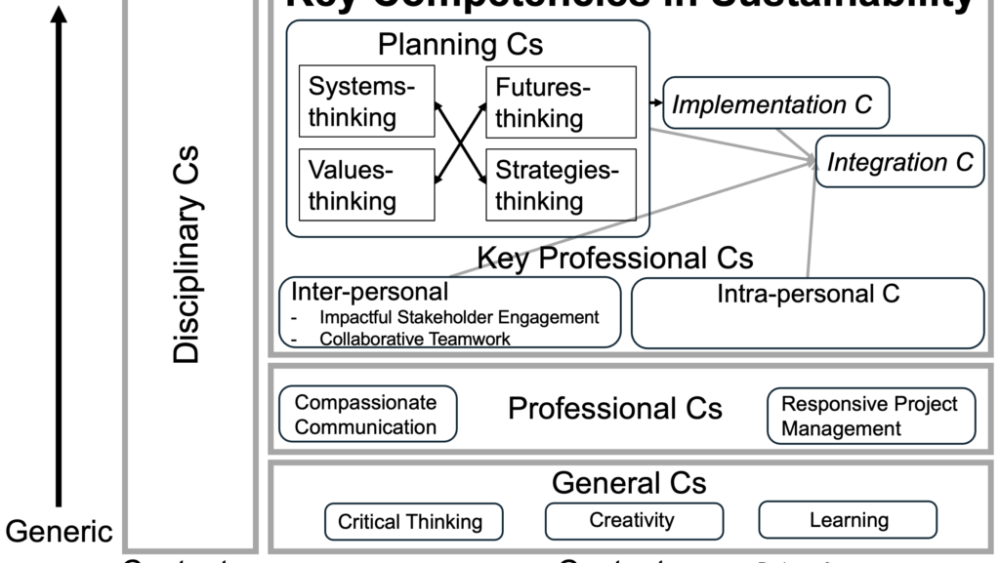
In that sense, the big topics to tackle when teaching for sustainability are, yes, the content, but very importantly addressing sustainability competencies, to normalize conversations (read more here about why that is so difficult and yet so necessary), to always work for equitable classrooms, and to think about the “inner development” that we as teachers also might have to do.

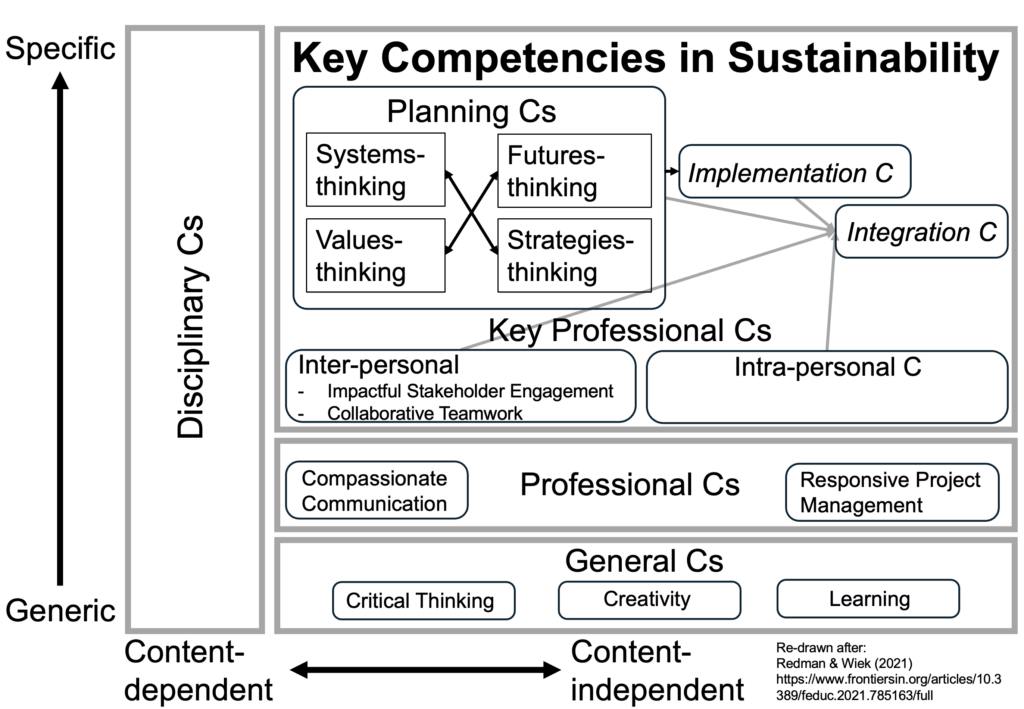
Looking at the key competencies in sustainability (and here we like the Redman & Wiek (2021) framework), those competencies are very similar with the competences that are required for a Master of Science in Engineering according to the Swedish Higher Education Ordinance (see mapping below). Sustainability itself is a topic in the value-related learning outcomes, in the skills both explicitly and in how we set for example the “predetermined parameters” within which students have to solve problems, but even in the knowledge-based learning outcomes, where students choose a field of technology in which they specialize.

So much for the motivation for teaching for sustainability, and the necessity to think about it in everything we teach — after this brief introduction, we moved on to presentations of the projects, and then fruitful and enjoyable in-depth discussions. The topics of the projects range from a systematic literature review on the one end, over different suggested formats for sustainability workshops, over wicked-problem-based teaching in aerosol physics, to a tried & tested 2-hour workshop in structural engineering by the authors of this blogpost. The project reports of all projects will be published on this blog at a later date (after all, course participants got a lot of interesting feedback and food for thought today!), so there is a lot to look forward to!

This entry was posted in

Event summaries

Comments

0 Comments Leave a comment

Ideas on how to support transformative change

In the face of increasing conflict and uncertainty, there is a growing movement within and beyond the academy to assess the current assumptions underlying knowledge production and learning in higher education. In this seminar, we introduced the notion of transformative learning and shared specific examples that demonstrated possibilities for the university to inspire critical reflection, evaluative judgement, and self-examination.

What is the role of the university? Depending on who you ask, you will receive just as many answers. In its Strategic Plan (2017-2026), Lund University states “[t]he organisation is to safeguard democracy, legality, impartiality, freedom of opinion, respect for the equal value of all human beings, efficiency and service as well as democratic principles, human rights, and freedoms.” Within the context of higher education, what approaches are used to both demonstrate these values as well as equip students to be capable of the same in their professional and civic responsibilities?

This seminar introduced transformative learning as one approach academics can implement in their pedagogical and professional development. Transformative learning refers to a process where individuals change their frames of reference by critically reflecting on their assumptions and beliefs, thus consciously making and implementing changes to their worldview.

During the seminar, we:

  • Explored assumptions and expectations within higher education
  • Introduced the concept of transformative learning
  • Considered its relevance in our teaching practice
  • Shared examples and actions to support students’ transformative learning
  • Discussed other roles the university shall play in society

See the slides from the seminar here!

For this seminar, we invited contributions from the following speakers:

Lisette van Beek

Lisette is a Postdoctoral Researcher at Utrecht University in the project “The university in a changing climate: new directions for transformative learning”. She explores the problematic assumptions and expectations within higher education, advocating for deep transformative change. For example, she highlights the Urban Futures Studio, which engages in action-oriented and transdisciplinary research at the interface of science and society.

Martina Oxling

Martina is currently a Strategy Consultant in Community Development at Sweden’s PE Teknik & Arkitektur. Formerly, she was the project manager of the Sustainable Futures Hub at the Lund University School of Economics and Management (LUSEM). She will share the initiative “Living the Sustainability Idea”, a voluntary track offered to students in MSc International Strategic Management and MSc in Management at LUSEM. The track challenged students to consider their own individual abilities to affect change at the local, national, and global level, anchored by the Inner Development Goals.

The event was moderated by Terese Thoni, Education Coordinator at the Lund University Sustainability Forum. It was a hybrid event allowing for both online and on-site participation and was conducted in English. It was held on 16 May 2024 at Geocentrum, Sölvegatan 10 between 10:30 and 12:00.

About the Organisers

The seminar was organised as part of the initiative Teaching for Sustainability. We aim to support educators, by developing and organising pedagogical coursework, training opportunities, workshops, expert-led seminars, and other inspiration-rich resources. Our ultimate goal is to foster a culture that enriches the educational experience for both educators and students that meaningfully advances sustainability.

We invite those interested to join our growing Community of Practice – we engage and empower members to explore real approaches to integrate sustainability into their teaching practice. Regularly, we host an inspiration or social event, bringing together the community. Anyone can become a member – the extent of your engagement is entirely up to you.

The initiative Teaching for Sustainability is a cooperation between the Lund University Sustainability Forum, the Division of Higher Education Development (AHU), and the Centre for Engineering Education (CEE).

This entry was posted in

Event summaries

Comments

0 Comments Leave a comment

Structural Engineers Pondering Teaching for Sustainability — A Guest Post by Ivar Björnsson & Jonas Niklewski

The discipline of structural engineering has experienced few disruptive breakthroughs in recent decades, so we have become quite comfortable teaching what we learned ourselves when we were students. Meanwhile, the construction sector is trying to navigate through a green transition, and we don’t know exactly what the construction sector will look in 10-20 years. One thing is for sure, the sector must become more sustainable. So, while structural engineering as a subject remains unchanged, the boundary conditions for structural engineers are changing in real time. Is it our duty to equip students for this uncertain future, or should we focus on the core of the discipline? And if so, how can we effectively teach sustainability when we ourselves have not been formally educated in this area?

Teaching for sustainability can be a tricky subject and we’ve found there are some obstacles along the way which must be contended with. To start, we are always used to having definitions for things – this seems to be a bit of a rabbit hole when it comes to sustainability but can be avoided with one simple strategy: we want to focus on doing it – rather than having an abstract discussion on what it is. When we adopted this approach, we found it a lot easier – we started to think about how we could do “teaching for sustainability”. On the other hand – we will not completely abandon a definition – here is a simple one: let’s not mess this up for our children and children’s children, etc. 

Another issues which we’ll briefly mention concerns a common comment (which admittedly, we’ve used before): …but my course is not about sustainability. Well, given that the premiss is about teaching for sustainability rather than about sustainability, this point is less significant in our opinion. We of course realize that this may not help those stuck with trying to figure out how to adjust a previously well though and structured course. We also struggle with this, without a definitive answer – however, we still think the struggle is worth it and that there may be some way to connect most topics to sustainability without it necessarily taking over a course.

Although we have solved our definition dilemma, and conveniently side-stepped the issue of relevance, we are still stuck on with the question how can we do it well? An obvious starting point is to see what others have done! As part of this, we talked with teaching colleagues who have their own experiences with teaching about (and sometimes for) sustainability. Their input was inspiring, and we got some concrete examples to help us, such as connecting each learning activity with some sustainable development goal (SDGs) or providing real life examples (our courses relate to structural engineering, so we usually show buildings and bridge and other stuff). A second source is the published literature – of which there seems to be A LOT!!

During our initial article search online we mostly found articles that were either (1) too theoretical and abstract (making them difficult to understand), or (2) very specific case studies (where the results may not be generalized). We also quickly realized our limited grasp of the theoretical concepts, varied method and models use, and abstract themes often included in the articles. We could find no sustainability teaching for dummies of sustainability Rosetta stone to help us translate. Nonetheless, we marched on and (somewhat arbitrarily) chose two relatively recent articles published in the Journal of Cleaner production:

  • Holdsworth & Sandri (2021). Investigating undergraduate student learning experiences using the good practice learning and teaching for sustainability education (GPLTSE) framework. Journal of Cleaner Production311, 127532.
  • Gutierrez-Bucheli, Kidman & Reid (2022). Sustainability in Engineering Education: A Review of Learning Outcomes. Journal of Cleaner Production, 330, 129734.

These articles were loosely chosen as they included a review and the first also contained a concrete case study. We then carried out an epistemically-challenged review (made-up term, but sounds super scientific), and came to some interesting insights of which we’ll share here:

  • Education for sustainability is essentially good teaching, i.e., not something ad-hoc or external to our courses. This makes it quite relevant for all our courses.
  • Some general frameworks or guidelines for implementation seem to exist, which can highlight some useful practices, teaching approaches and learning outcomes. However, it is not always clear for us (the teaching laymen) what this means specifically for our courses.
  • There are many people out there doing this kind of teaching with some good results. However, it is often difficult to grasp the specifics as the articles may be on a higher level and when cases are presented, we may not easily see how our specific courses could benefit from what was described.
  • When concrete cases are provided, these can be very revealing (peeling away the abstract to reveal something tangible and concrete). It can provide inspiration for what to do with some added confidence that comes with seeing the results it provided. Now, we should be careful to generalize, but our own experience is that we as teachers need to braver in applying new things in our courses 😉
  • As teachers our focus is often on our own courses, but the issue also needs to be addressed at higher levels (e.g., integration into program curricula). Perhaps this is a calling for us to try and influence the administration in these questions. In any case, we think a bottom-up and top-down approach should occur simultaneously (and ideally somewhere in there are the wishes of the students).
  • Although we struggled with some of the theoretical aspects of the papers, we still came away with something useful.
  • At the face of it, sustainability as a concept appears complex with multiple components (pillars, etc). On the other hand, it is perhaps not necessary to try and incorporate all of these into all our courses. Choose those aspects which you find most relevant or exciting.

Finally, we want to urge others to be brave enough to try something new with the knowledge that you might fail. This failure will not have been in vain, you will have learned something valuable and adjust for next time. For those who would like to share in future failures and glories, or simply want to talk about these issues more, feel free to contact us 😉

A final tip is to take Mirjam’s course on Teaching for Sustainability – it helped push us towards thinking more about these issues and actually doing something about it 😊

/Ivar & Jonas

Ivar.bjornsson@kstr.lth.se

Jonas.niklewski@kstr.lth.se

This entry was posted in

Literature

Comments

0 Comments Leave a comment

An Evening of “Serious Gaming” with Playful Colleagues — A Guest Post by Ester Barinaga

The vast majority of us relates to money as a thing that we either have or we don’t have and that, regardless of our economising efforts, few seem to have enough of. We see money as neutral, the instrument we use to buy and sell, borrow and pay-back, save and spend. Having black-boxed money, we are unable to see that its internal design, the rules that determine how it is created, what for and by whom, how it is introduced into the economy and how it is withdrawn shape individual behaviour and social dynamics. Indeed, the internal design of today’s conventional money is at the root of many of our sustainability challenges, from growing socio-economic inequality, to recurring economic booms and busts, and climate change. But if money is designed, it can be redesigned so as to project us into a more sustainable future.

This is at the core of the course “Re-imagining money for a sustainable future” that I teach at LUSEM. When that lesson is taught with reference to the macro-scale, it often feels too abstract for students to fully comprehend. So, in an effort to help students feel and see the extent to which money’s design shapes society, I had been for a while considering introducing into the course a Money Game developed by monetary activist Matthew Slater (see here). I had however never seen the game being played, and so I felt unsure of how it worked, what sort of discussions it would lead to or how better to play it within the context of a classroom. Fortunately for me, the energetic, curious and playful group “Serious Gaming” within the inter-faculty initiative “Teaching for Sustainability” at Lund University were willing to be guinea-pigs.

For two hours, 14 colleagues from around campus enthusiastically took their roles in economies using variously designed monies. With simple means (two decks of cards, a bag of hazelnuts and a few square orange pieces of papers), we simulated four different economies: one organised through barter; a second organised through Chartalist money issued by the king and injected into the economy selectively through a minority of people; money issued through loans to whoever was willing to pay those loans back with an interest (similar to today’s conventional money); and a fourth economy where money was introduced by a central authority through payment of Universal Basic Income.

It turned out my new-found colleagues across campus were not only very lively players, they were  also sharply reflective of money. They observed with keen detail how the various money game rules had led them to different trading strategies; they described the feelings of anxiety of not being able to “make it” in one scenario vs the feeling of tranquility developed as they played in another scenario; depending on the scenario played, they showed competitive vs caring behaviours. Through playing, I understood what sorts of discussions the game arises and I could expect in the classroom as well as the panoply of feelings it would awake in students. And much more. Beyond the topic lessons learnt through the game, they gave me excellent feed-back on how to improve the logistics (for instance annotate not only the inequality effects of the various monetary designs but also the amount of debt each had ended up with – after repayment – as well as how much each had managed to produce – in the form of families of four equal cards).

All in all – a seriously fun evening, and an inspiring crowd I hope to continue playing with.


Are you interested in joining similar events? Then make sure to join our Teams team so you don’t miss any future events!

This entry was posted in

Event summaries

Comments

0 Comments Leave a comment

Liberating Structures: Methods for “Including and Unleashing Everyone”

Liberating Structures were developed to “engag[e] everyone to build a good life together” (Lipmanowicz et al., 2015). They are a collection of methods that can “unleash the collective intelligence of the entire community of students”, by organising space and air time in such a way that everybody is equally invited to contribute and that is facilitated such that all voices are heard, and that ideas are evaluated based on their merit and not on who had them. Being heard and seen makes participants feel valued and included, and that contributes to motivation to keep going even with difficult tasks. That is exactly what we want in teaching for sustainability — both for its effect on motivation, but also because in a sustainable world, all voices are valued and included in the discussions, and ideas are evaluated independently of status or other markers of whom they came from.

The individual methods are not rocket science, the easiest one (“1-2-4-all”) is basically a version of think-pair-(2-pairs-together)-share (one of the equitable classroom techniques that I wrote about the other day). Here are two other methods that we used in our “Teaching for Sustainability” course last week (but check out the full collection at Liberating Structures, too):

Impromptu Networking

Impromptu Networking (see also figure below) is an alternative to the classical introduction round where some few people take up a lot of airtime, others are too stressed about what they are going to say when it is their turn to listen to the previous speakers, the teacher sees their time management imploding, and many are overwhelmed by all the information coming at them from all sides. In Impromptu Networking, on the other hand, participants only talk for a few minutes in three rounds of pairs, and focussed on their expectations for the meeting, what they hope to contribute, and what they hope to get out. This means that the meeting starts with a decentralised discussion about the purpose of the meeting, where participants sharpen their own expectations and roles through three short conversations. Even though in this method not everybody (in fact, nobody) gets to speak in front of the whole group, everybody builds or strengthens three connections with other participants and is immediately engaged, seen and heard.

Min Specs

The Min Specs method is perfect for streamlining processes but getting commitment behind each step by pruning everything down to the bare minimum. Here, participants generate “rules” for a process and then ask themselves “if this rule was broken, would we still be able to achieve the purpose?”. If the answer is yes, that rule is dismissed. So in the end, the set of rules that remains is absolutely necessary for the success of the project, which gives a lot of flexibility because other, unnecessary rules are gone, but it has also become clear to everybody why the remaining rules are essential.

For example, if you were to organise a meeting, it is essential to announce time and date, and to define a purpose for the meeting, but inviting an expert speaker, having a detailed agenda, or preparing fancy slides are optional.

There are a bunch more methods for many different purposes, which I might present as we use them in our course. In the meantime, you could browse the library for other structures (Liberating Structures), and let us know about your thoughts and experiences using them!


Lipmanowicz, H., Singhal, A., McCandless, K., & Wang, H. (2015). Liberating structures: Engaging everyone to build a good life together. Communication and” the good life”(International Communication Association Theme Book Series, Vol. 2, pp. 233-246). New York: Peter Lang.


This entry was posted in

Literature

Comments

0 Comments Leave a comment

Why is it so Difficult to Talk about Sustainability? The “Spiral of Silence”

One challenge for teachers wanting to include more sustainability in their teaching is that we haven’t yet normalized talking about sustainability in all contexts. I found the “Spiral of Silence” (see figure below) in a thesis about climate change conversations with children, but I think it is a very helpful model even when thinking about talking about sustainability in higher education classrooms, or in everyday conversations, since it shows why it is so difficult to talk about sustainability:

On the one hand, there are political and economical reasons for many people to not want to have good conversations about sustainability, so there are powerful players that benefit from, and thus artificially create, misinformation and polarisation, thus inhibiting conversations.

But also within communities, there are several factors that make conversations difficult:

  • Many people (even teachers) feel that they don’t know enough to have conversations about sustainability. That is very relatable, but the problem is that it is a wicked problem, meaning that there is no one right solution, so there are also no experts that have a solution. Everybody has a lack of knowledge about some aspect, and we have to get over that and still engage in conversations, but be prepared to learn from and with each other, and educate ourselves
  • The prevailing silence on the topic of sustainability makes it seem like it is not a topic that matters to people (because otherwise they would surely be talking about it?), but that is of course a vicious circle – if we don’t talk about it because so few other people are talking about it, what will encourage them to keep talking, or get more people engaged in the conversation?
  • People have doubts about who to talk to, and when. We don’t want to take hope for a good future away from children, or overburden them at a too young age. But even with students some teachers feel like “here, they should focus on learning x, and I want them to focus on that and not get caught up in despair or discussions that are beyond the scope of my course”. Because if we open up for conversations that students feel a need for but don’t have any other opportunity for, this might take on a dynamic of its own! But of course at some point, someone needs to start talking somewhere
  • There is also just plain emotional resistance against engaging with negative messages, and that is a powerful obstacle to conversations or engagement
  • Lastly, the educational system does not adequately prepare or encourage people to have these conversations. But this is where we are working for change now! 🙂

I find this Spiral of Silence so helpful because it shows how complex the problem is. It is not just that there are players who don’t want us to talk about sustainability, even within ourselves there are so many obstacles to overcome! But becoming aware of those is a good first step, and maybe reflecting on which of those (and possibly other) obstacles are relevant in our individual case. And maybe a good second step is joining our community on Teams or at an in-person event and finding other teachers willing to talk, and engage, and teach for sustainability?

After: Crease, A., & Singhasaneh, N. (2023). Climate Change Conversations with Children: Making Sustainability Meaningful, Tangible, and Actionable (Doctoral dissertation, Massachusetts Institute of Technology).

This entry was posted in

Literature

Comments

0 Comments Leave a comment

A Family Game for Sustainability – ‘Go Fish in Vombsjön’ (Guest Post by Anna Nohed)

All six cards of the Red family

In 2022, together with my peer students in the Environmental Studies and Sustainability Science program (LUMES), I designed the game “Go Fish in Vombsjön” to highlight issues related to more sustainable water usage at Lake Vombsjön in Skåne. It’s a card game primarily aimed at children from middle school or older but can just as well be played and enjoyed by adults, regardless of their level of education or knowledge.

The best thing about the game is that learning comes along with it. It doesn’t require any special knowledge or even an interest in sustainability issues to participate. Instead, the appeal lies in the enthusiasm for participating in a social game and the desire to beat one’s opponents. Hereafter, I will briefly explain the process that made the game possible, how we designed it, and finally share my insights, as well as how you could use the game “Go Fish in Vombsjön” with your friends, colleagues, or in education.

The game is played by students at a school in Staffanstorp.

Between 2021–2023, I studied the Environmental Studies and Sustainability Science master’s program at Lund University. During our second semester in the “Knowledge to Action” course, our task was to highlight a sustainability problem in our local area, document it, and clarify the process for identifying a solution to the problem.

The working group I was part of had already initiated a dialogue with the ARNA association in the UngScishop project. ARNA works to spread knowledge about sustainability challenges through ARt and NAture. Within the UngScishop project, they work with middle school students from schools around Vombsjön to teach them about sustainability related to the area. (see more from ARNA at www.arna.nu)

Our contact with ARNA made us students curious about Vombsjön, which is the water source for Lund Municipality and several other municipalities in Skåne. An intensive period of interviews with local stakeholders around Lake Vombsjön, as well as thorough research of official documents and academic sources, enabled us to identify several different aspects that all influenced the water quality in the lake.

The group collectively concluded that a game is a good method for learning about complex subjects and engaging across generational boundaries. The well-known game “Go Fish” provided the framework for the game’s structure, with the rules being largely the same. By using an existing structure, it’s easy to learn the game, and it only takes a few minutes to start an engaging and entertaining game.

The card game consists of six categories, with each category reflecting a problem that negatively affects the water in Vombsjön. Each category consists of 5 steps that reflect the different letters in the DPSIR method, plus one card that explains the story behind the problem.

The DPSIR method is a method used in sustainability studies and is mentioned in Burkhard & Müller, 2008 *, where the different letters stand for:

D – Drive, P – Pressure, S – State, I – Impact, R – Response

To make the game accessible and move away from an academic and sometimes inaccessible jargon, we chose to translate the meaning of the letters as follows:

Drive: The root cause

Pressure: What’s the problem?

State: Current situation

Impact: What does it lead to?

Response: What can you do?

Thus, we created a deck of cards with seven categories, where each category consisted of six cards (DPSIR + a story card), and all the cards together in a category formed a family. The player who collected the most families at the end of the game wins.

All six cards of the Red family

How can the game be used?

In the introduction to this post, I mentioned that the game can be used as a social game or for educational purposes. To date, the game has been played by staff at LUCSUS and students in the LUMES master’s program, as well as with around 150 middle school students in schools around Skåne.

The idea of the game is to create understanding and insight into how complex sustainability problems are interconnected but also to provide examples of how we ourselves have power over its structural problems and that sometimes we can influence the outcome by changing our everyday actions and behaviours. At the same time, it was important for the game to be engaging and entertaining. This way, we could attract and reach groups of people who would not otherwise be exposed to this type of information.

Each card in the deck tells a story. The story describes a problem, what affects the problem, and what we can ideally do about it, thereby contributing to change. By reading one of the stories at the end of each game round and then discussing it in the group, the problems are made visible and easily accessible and understandable. We, the creators of the game, hope that each round will lead to insights and hopefully provoke discussions outside the classroom. In the long run, the game can change behaviour and contribute to more sustainable water usage around Vombsjön.

On one occasion, a class from Sjöbo got to play “Go Fish in Vombsjön”. One of the teachers shared the insight that the game doesn’t need to be played in its entirety; selected parts can form the basis for discussions and assignments in the classroom and can thus be included in the regular teaching schedule. This is beneficial since time and the set curriculum can be restricting factors when trying to introduce a new topic or activity in schools.

The story of Vombsjön told in the game

Lessons learned and critique

After each time we play-tested with a group of students, we were eager to receive feedback and any criticism. Already, at the beginning of the design process, we made sure to give each card a number, and each family should be recognizable through its colour. The colour is also printed in text, so the game can accommodate the different needs of the players and misunderstandings about the colours don’t arise. (Which is an important aspect of the game). One comment we received was that each family in the deck should have a name that reflects and summarizes the problem and the described story. Depending on the age group, the amount of text on each card can be too abundant and sometimes difficult to understand and would therefore benefit from being further shortened for the younger players’ sake.

Where can I find the game?

During the course of the master’s program LUMES, a deck of cards was produced in English and one in Swedish. Over time, several decks of cards have been produced in Swedish under the name “Finns i Vombsjön”. Currently, there are about 10 decks of cards, 2 of which are now found in classrooms in Skåne. Each deck consists of 47 cards, with each card being manufactured by glueing the back and front together, cutting out each card, and laminating them by hand. This is a time-consuming process, and I hope to make the game more widely available through free downloads of PDF files, where you can make as many games as you want on your own.

Would you like to borrow a game today? Then feel free to contact me at annanohed@gmail.com.

Here you can read further about our collaboration with ARNA and watch a video about the game. https://ungscishop.se/lunds-universitet/lumes-studenter

The Swedish version of the game

*Burkhard B. & Müller F. Encyclopedia of Ecology Ecological Indicators: Driver–Pressure–State–Impact–Response. Elservier. 2008. 2: 967-970.

This entry was posted in

Experiences from the field

Comments

0 Comments Leave a comment

Task Force Meets to Coordinate Upcoming Events & Initiatives

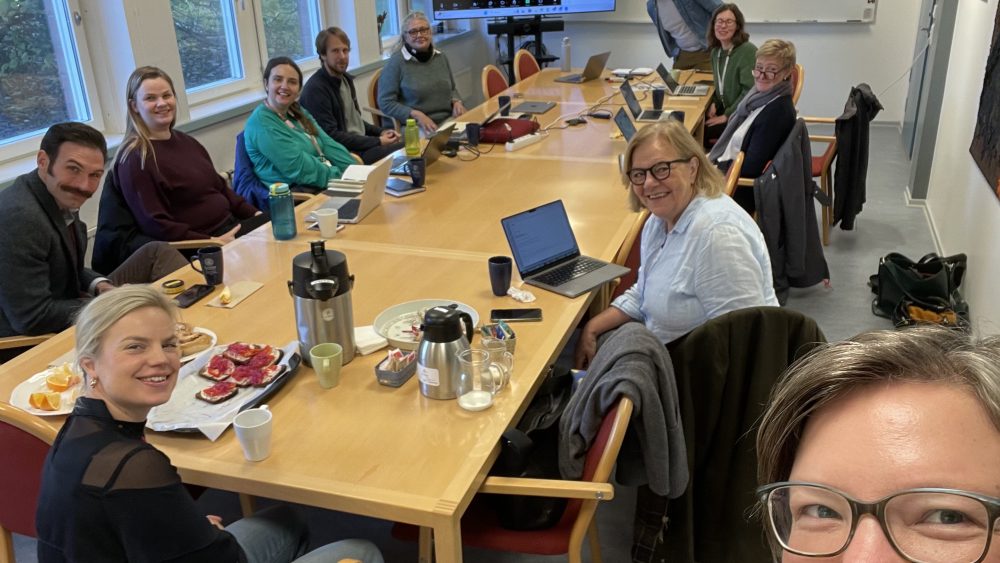
From Left to Right: Britta Sjöstedt (Senior Lecturer, Department of Law); Karin Delin (Educational Services, Faculty of Law); Magnus Sandberg (Associate Professor, Faculty of Medicine); Steven Curtis (Academic Developer, AHU); Terese Thoni (Education Coordinator, Sustainability Forum); Anders Sonesson (Head of Department, AHU); Jessika Luth Richter (Programme Director; IIIEE); Mirjam Glessmer (Academic Developer, CEE); Aysegul Sirakaya (Senior Lecturer, Faculty of Law) (online)

[Edit 21.8.2025: Please note that we have renamed the “Task Force” to “Roundtable”, and the “Working Group” to “Coordination Team”]

The “Teaching for Sustainability” work (this blog, the events we run, the resources we develop, and much more) is coordinated by Terese Thoni, the education coordinator at the Lund University Sustainability Forum, together with colleagues from the Division of Higher Education Development and the Centre for Engineering Education. We organise ourselves in the following groups:

  • Working Group: This is the group that engages in operational planning, with meetings at least every month (currently, Terese, Steven, Karin, and Mirjam are in this group, but we welcome anyone else who wants to get engaged here!).
  • Task Force: Receives information and provides input that guides the work of the working group, with meetings at least once per semester. A representative (or several) from every Faculty is invited to join the Task Force (Get in touch if you would like to join!)!

On February 13th, the Task Force met for updates, feedback and general discussions. We talked about, among other topics,

As always: If you would like to get in touch, we would love for you to contact us and join us in any and all of our efforts! 🙂

This entry was posted in

Task Force

Comments

0 Comments Leave a comment

Newer Posts Older Posts